

Advantages of Home Automation

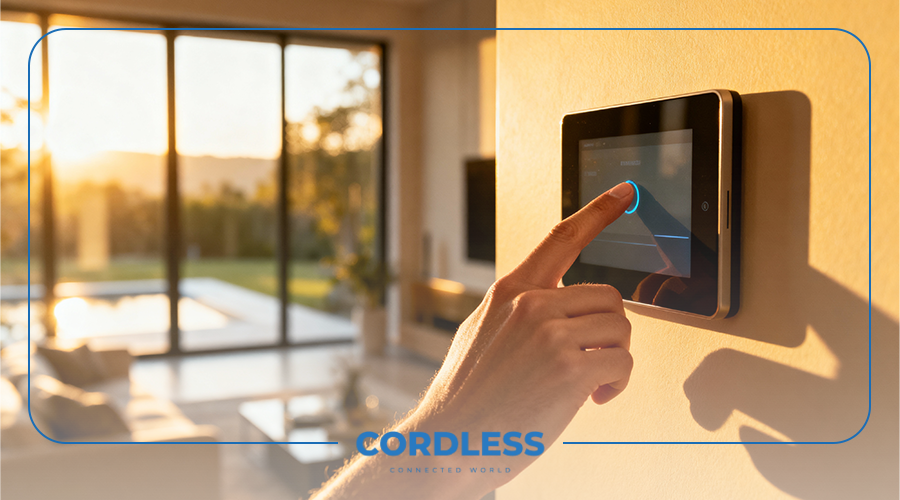
Home automation is no longer a luxury reserved for tech enthusiasts — it has become one of the fastest-growing trends in modern living. Whether you want to save energy, feel safer, or simply enjoy more convenience, the advantages of home automation are hard to ignore. In this guide, we’ll walk you through everything you need to know: what smart home automation actually is, how it works, the key benefits it delivers, and how you can get started today — especially if you’re in Egypt.
Related topics: disadvantages of home automation | technology used in home automation | smart home advantages and disadvantages | home assistant automation examples | home automation examples | home automation components | advantages of smart home
Advantages of Home Automation
The advantages of home automation go far beyond convenience. Smart home systems give you control, savings, and peace of mind all in one place. Here’s a quick overview of the top benefits before we dive deeper:
- Remote control of lights, locks, shutters, and appliances from anywhere
- Energy savings through intelligent scheduling and usage monitoring
- Enhanced security with smart locks, access control panels, and real-time alerts
- Comfort and personalization — your home adapts to your routine automatically
- Increased property value in a market that increasingly values smart features
- Accessibility for elderly residents or people with mobility challenges
- Peace of mind through integrated security and remote monitoring
Each of these benefits will be explored in full detail in the sections below.
What is Smart Home Automation?
Smart home automation refers to the use of connected devices and systems that allow you to control, monitor, and automate various functions in your home — lighting, locks, shutters, heating, air conditioning, entertainment, and more — from a single app or voice command.
At its core, a smart home automation system connects your home’s devices through a central hub or cloud platform. These devices communicate over wireless protocols like Wi-Fi, Zigbee, or Z-Wave, allowing them to respond to your commands or pre-set schedules automatically.
Think about it this way: instead of walking to a wall switch, you tell your phone (or simply your voice assistant) to turn off all the lights when you leave. Your smart lock logs who enters and exits the front door. Your motorized shutters open automatically at sunrise. That’s smart home automation in everyday life.
Home Automation Using IoT
The technology that makes home automation possible is the Internet of Things (IoT) — a network of physical devices embedded with sensors, software, and connectivity that enables them to exchange data and act intelligently.
How IoT Powers Your Smart Home
In a home automation system, IoT devices include:
- Smart switches and wall panels that replace traditional light switches and connect to your Wi-Fi or Zigbee network
- Smart locks that replace conventional door locks and allow fingerprint, PIN, card, or smartphone access
- Smart shutters and curtain controllers that automate your blinds or motorized curtains
- Smart hubs and control panels that serve as the brain of the system, connecting all devices in one interface
- IR/RF universal controllers that give smart control to legacy appliances like air conditioners and TVs
For example, Cord-less offers the CL-ZHUB Zigbee Hub, which connects all your Zigbee-based devices into one unified smart home ecosystem. Combined with a Smart Control Panel (5″, 8″, or 10″ inch), you get a fully touchscreen-managed home experience.
Wireless Protocols: Wi-Fi vs Zigbee
One important decision in home automation using IoT is choosing the right wireless protocol. Two of the most common options are:
Wi-Fi devices connect directly to your home network — easy to set up, widely compatible, but can strain your router with many devices.
Zigbee devices form a mesh network that’s more energy-efficient and reliable at scale — ideal for larger installations with many smart devices running simultaneously.
Cord-less provides both options across its product range, so you can build the system that fits your home’s size and needs. You can also read our detailed comparison in Wired vs Wireless Home Automation to help you decide.
Key Benefits of Home Automation
Now let’s explore the key benefits of home automation in depth — going beyond the surface-level promises to the real, practical impact on daily life.
1. Enhanced Home Security
Security is consistently ranked as the number one reason people invest in smart home technology. Home automation gives you tools that traditional security simply cannot match.
With smart locks, you eliminate the risk of lost keys entirely. Cord-less smart locks like the CL-G2 and CL-MARS support multiple access methods including fingerprint recognition, PIN codes, RFID cards, and smartphone app control. You can grant temporary access to guests, track who entered and when, and lock or unlock your door remotely from anywhere in the world.
Smart locks from Cord-less are not cameras — they are sophisticated access control devices. Some models include a built-in camera as part of the door unit for visual verification of visitors, combining access control and monitoring in one device.
For a deeper look at security options, visit our blog on Smart Home Security Systems.
2. Energy Efficiency and Cost Savings
One of the most tangible advantages of home automation is the reduction in energy bills. According to industry studies, smart home automation can reduce energy consumption by 10–30%, depending on the devices used and usage patterns.
Here’s how it works in practice:
- Smart switches like the CL-03G Smart Touch Wall Switch allow you to set schedules, so lights automatically turn off when rooms are unoccupied
- Smart shutters regulate natural light and insulation, reducing the load on your air conditioning
- The CL-U1 USB Infrared Controller lets you schedule your air conditioner to turn off at night or when you leave home
Over time, these small optimizations add up to significant savings — making home automation an investment that pays for itself.
3. Unmatched Convenience and Comfort
Imagine waking up and having your shutters gradually open as your alarm goes off, your coffee maker already brewing, and your bathroom light at the perfect brightness. That’s the comfort that home automation delivers every day.
Key convenience features include:
- Voice control through Amazon Alexa or Google Assistant — control devices hands-free
- App control — manage your entire home from your smartphone, whether you’re in bed or on the other side of the world
- Automation scenes — set “Good Morning,” “Movie Night,” or “Away Mode” scenes that adjust multiple devices with a single tap
- Family sharing — allow multiple household members to control the same devices with their own permissions
The CL-1M Intelligent Circuit Breaker is a perfect example of converting a standard appliance into a smart device that you can control remotely and schedule automatically.
4. Remote Monitoring and Peace of Mind
Whether you’re at work, traveling, or just in another room, home automation keeps you connected to your home. Receive instant alerts if your smart lock detects an unauthorized entry attempt. Check whether you left the lights on. Lock the front door you forgot to close.
This remote monitoring capability is especially valuable for:
- Families with young children
- Homeowners with vacation properties
- Elderly relatives living alone
- Business owners managing multiple locations
Cord-less also serves corporate clients — you can explore Corporate Smart Solutions for office automation needs.
5. Increased Property Value
Smart home upgrades are among the top home improvements that increase property value. Real estate data consistently shows that homes equipped with smart automation features sell faster and at higher prices than comparable non-smart homes.
Buyers increasingly expect smart features — particularly smart locks, automated lighting, and remote access control. Installing a system from a reputable provider like Cord-less means you’re adding lasting value to your property.
6. Accessibility for All
Home automation is a game-changer for people with disabilities or limited mobility. Voice commands and app controls eliminate the need to physically interact with switches, locks, or appliances. Automated doors and smart shutters become especially important for wheelchair users or individuals with motor impairments.
The independence and dignity that home automation provides for elderly or differently-abled residents is one of its most meaningful — and often overlooked — advantages.
7. Centralized Control
One of the most underrated home automation benefits is having everything in one place. Instead of managing separate apps for your lights, locks, shutters, and AC — a centralized smart home hub brings it all together.
Cord-less offers touch Smart Control Panels from 5″ to 10″ that serve as a command center for your entire home. The larger 10″ pro model is ideal for villas and larger apartments that require full-home management from a single wall-mounted panel.
How to Set Up a Home Automation System
Setting up a home automation system doesn’t have to be complicated. Here’s a practical, step-by-step approach:
Step 1: Identify Your Priorities
Decide what you want to automate first. Most homeowners start with one of three areas:
- Security (smart locks, access control)
- Lighting (smart switches, scenes, schedules)
- Climate control (smart AC control, shutters)
Step 2: Choose Your Protocol — Wi-Fi or Zigbee
If you have a small apartment with a few devices, Wi-Fi smart devices are simpler to set up. For larger homes or if you plan to expand your system over time, a Zigbee hub-based system offers better performance and scalability.
Read our blog Wired vs Wireless Home Automation for a full comparison.
Step 3: Select Your Devices
Based on your priorities and protocol, choose compatible devices. A typical starter kit might include:
- 1–2 smart switches (for lighting)
- 1 smart lock (for front door)
- 1 smart shutter controller (for main windows)
- 1 smart hub or control panel (if using Zigbee)
Step 4: Install and Connect
Most Cord-less devices are designed for straightforward installation. Smart switches replace your existing wall switch using the same wiring. Smart locks replace your existing door cylinder. The Cord-less app guides you through device pairing step by step.
Step 5: Configure Automations and Scenes
Once your devices are connected, set up your automations — schedules, triggers, and scenes. This is where the real magic of home automation happens. Set lights to turn off automatically at midnight. Create a “leaving home” scene that locks the door, turns off all lights, and lowers the shutters with one tap.
Step 6: Expand Over Time
Home automation is modular — you don’t need to do everything at once. Start with the basics and add more devices as you get comfortable with the system. Cord-less products across all categories are designed to work together within the same ecosystem.
What is the Best Smart Home Company in Egypt to Get Started?
If you’re in Egypt and looking to get started with home automation, Cord-less is the leading local provider with a full range of smart home products — from smart locks and touch wall switches to motorized shutters and centralized control panels.
Here’s why Cord-less stands out:
- Wide product range across Smart Locks, Smart Access, Smart Home (lighting and control), and Smart Shutters
- Both Wi-Fi and Zigbee options available across product categories
- Egypt-based support team with 24/7 customer support and local installation assistance
- Matter protocol support on select products like the CL-03 (Matter) and CL-21 (Matter) — the newest universal smart home standard ensuring compatibility across all major ecosystems
- Corporate solutions for offices, hotels, and residential developments
You can also explore how Cord-less compares to other providers in Egypt by reading Smart Home Companies in Egypt and Top Home Automation Companies.
Home Automation Components: What Makes Up a Smart Home System?
Understanding the key components of a home automation system helps you make informed purchasing decisions. Here are the essential building blocks:
- Smart Switches and Dimmers — Replace traditional wall switches with touch panels that support remote control, scheduling, and scene activation. Examples: Cord-less CL-01G, CL-02G, CL-03G, CL-04G touch wall switches.
- Smart Locks — Replace traditional door locks with multi-access devices supporting fingerprint, PIN, RFID, app, and voice control. Cord-less offers 34+ smart lock models for various door types including glass doors (GL01, GL03) and waterproof models (CL-21 Waterproof).
- Smart Shutter Controllers — Automate your motorized blinds, curtains, or roller shutters. Examples: CL-R3+RF Intelligent Curtain Controller.
- Smart Hubs — The central brain that connects all Zigbee or Z-Wave devices. Example: CL-ZHUB Zigbee Hub.
- Control Panels — Wall-mounted touchscreen panels for whole-home control. Cord-less offers 5″, 8″, and 10″ smart control panels.
- IR/RF Universal Controllers — Convert any IR or RF-controlled appliance (TV, AC, fan) into a smart device. Example: CL-U1 USB Infrared Intelligent Controller.
- Smart Circuit Breakers — Mini smart switches installed inside your electrical cabinet to add remote control to any circuit. Example: CL-1M and CL-3M Intelligent Circuit Breakers.
Disadvantages of Home Automation: A Balanced View
No technology is perfect, and home automation is no exception. Here’s an honest look at the potential drawbacks:
Initial Cost — Smart home devices cost more upfront than conventional alternatives. However, energy savings, added security, and increased property value typically offset this cost over time.
Internet Dependency — Most smart home features require a working internet connection. If your Wi-Fi goes down, remote access and automation may be temporarily unavailable. (Note: many Cord-less smart locks retain full local functionality even without internet.)
Learning Curve — Some users find the initial setup and app configuration overwhelming. Choosing a provider with strong local support — like Cord-less — mitigates this significantly.
Privacy and Security Concerns — Like any connected device, smart home systems can be vulnerable to cyberattacks if not properly secured. Always use strong passwords, keep firmware updated, and buy from reputable brands.
Compatibility Issues — Not all smart home devices work with each other. This is why the Matter protocol (supported in newer Cord-less models) is such an important development — it creates universal compatibility across brands and ecosystems.
Understanding both the smart home advantages and disadvantages helps you set realistic expectations and make smart purchasing decisions.
Home Assistant Automation Examples
Home assistant automation refers to pre-built or custom automation routines you can set up in your smart home app. Here are practical home assistant automation examples you can implement today:
- “Good Morning” Scene: At 7:00 AM, shutters open gradually, bedroom lights turn on at 30% brightness, and the AC turns off
- “Away Mode”: When you leave home, all lights turn off, doors lock automatically, and shutters close
- “Movie Night”: Living room lights dim to 10%, shutters close, and AC adjusts to a comfortable temperature — all triggered by a single tap
- Motion-Triggered Lighting: Hallway lights turn on automatically when motion is detected at night
- Guest Access: Temporarily share a smart lock PIN with a visitor that expires after 24 hours
- Energy Saver: All lights in rooms with no occupancy for 30 minutes automatically turn off
- Scheduled Shutter Control: Shutters in the living room open at 8 AM on weekdays, but at 10 AM on weekends
These home automation examples demonstrate how even simple automations dramatically improve daily life.
F AQs
What are the advantages of home automation?
The main advantages of home automation include improved home security (through smart locks and access control), significant energy savings (through smart scheduling and monitoring), greater convenience (remote and voice control), enhanced comfort (automated routines), increased property value, and better accessibility for elderly or differently-abled residents. When implemented with quality devices and proper setup, a smart home system pays for itself through energy savings, added security, and daily quality-of-life improvements