


Types of Smart Locks: 6 Best Options for Every Door in Egypt (2026 Guide)

Understanding the types of smart locks is the first step to choosing a lock that actually fits your door. Many buyers in Egypt fall in love with a lock’s features, then discover it does not suit their armored door, their aluminum frame or their glass office entrance. This guide explains the main types of smart locks, organized by door type and by unlocking technology, so you can match the right lock to the right door the first time.
Whether you are securing a villa, an apartment, a shop, a clinic or a garden gate, you will find a clear recommendation below, along with Cordless models you can compare directly.
Why the Types of Smart Locks Matter
A smart lock is not just an electronic keypad. Inside every model there is a mortise or lock body that must fit the thickness, material and structure of the door. A lock built for a 5 cm wooden door will not work on a slim aluminum profile, and a lock designed for indoor use will not survive rain on an outdoor iron gate.
That is why the types of smart locks are usually grouped in two ways:
- By door type: wooden and armored doors, iron doors and gates, aluminum doors, and glass doors.
- By technology: face recognition, palm vein, fingerprint, PIN code, card, mobile app and Matter-compatible locks.
Let us look at both, starting with the most important question: what door do you have? For background on how electronic locks evolved, see the smart lock article on Wikipedia.
Types of Smart Locks by Door Type
1. Smart Locks for Wooden and Armored Doors
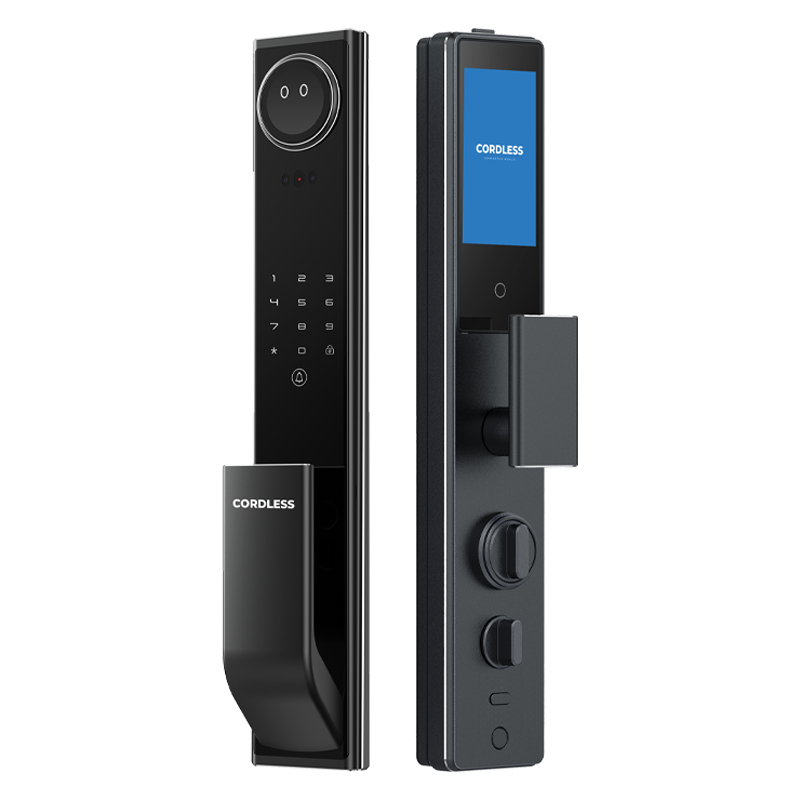
Wooden and armored (steel security) doors are the most common front doors in Egyptian apartments and villas, so this is also the largest category among all types of smart locks. These locks have a full-size body with a handle on each side, a large front panel for sensors and cameras, and an internal panel that holds the battery.
Most premium features appear in this category: 3D face recognition, palm vein, fingerprint, internal screens, 2-way video calls and automatic locking. Popular Cordless models include:
- CL-S16: fully automatic, AI 3D face, palm vein, fingerprint, NFC card and HD intercom.
- CL-G40: 3D face, palm vein, fingerprint, external camera and internal screen.
- CL-G30: external camera, internal screen and 2-way video call.
- CL-07 and CL-08: face, palm vein, fingerprint and camera at a more accessible price.
- CL-K2: 3D face ID, fingerprint, motion sensor and 2-way video.
2. Smart Locks for Iron Doors and Outdoor Gates
Iron doors and garden gates face sun, dust and rain, so they need a weatherproof design. These types of smart locks usually mount on the surface of the gate rather than inside a thick door body, and they focus on reliable access methods such as fingerprint, keypad, card and remote control.
The CL-21 family is built for this job. The CL-21 Waterproof is designed for outdoor installation on iron gates, and the CL-21 Matter adds Matter support for integration with other smart home platforms.
3. Smart Locks for Aluminum Doors
Aluminum (alumetal) doors have narrow profiles, so a standard lock body will not fit. You need a slim lock designed for these frames. The CL-15 is made specifically for aluminum doors and offers fingerprint, PIN, magnetic card, mechanical key and Tuya app control. It is a smart choice for kitchens, balconies, offices and shop entrances with aluminum frames.
4. Smart Locks for Glass Doors
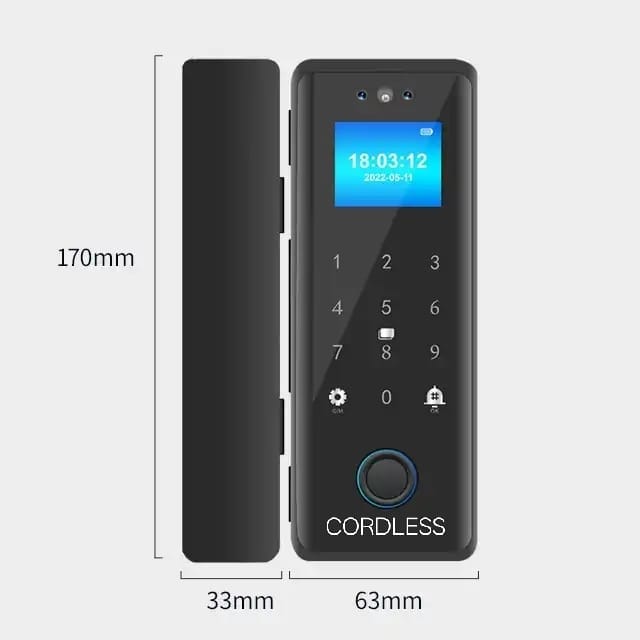
Frameless glass doors are common in offices, clinics, showrooms and meeting rooms. Drilling glass is risky and expensive, so glass door smart locks clamp onto the door without drilling. Among the types of smart locks, these are the easiest to install in commercial spaces.
- GL01: 3D face recognition, fingerprint, PIN, RFID card and remote control.
- GL03: fingerprint, PIN, RFID card and remote control.
Types of Smart Locks by Unlocking Technology
Once you know which lock body fits your door, the next decision is how you want to unlock it. Here are the main technologies, from the most advanced to the most basic.
3D Face Recognition Locks
These locks scan your face with depth-sensing cameras and open hands-free in about a second. 3D models resist photo and video spoofing. They are ideal for families who want the most convenient entry. Read our detailed comparison in the face recognition door lock guide.
Palm Vein Locks
Palm vein sensors use near-infrared light to read the vein pattern under the skin of your hand. Because the pattern is internal, it is extremely hard to copy, and it works well for elderly users whose fingerprints are faint. Many Cordless locks, including the CL-Space and CL-L2, combine palm vein with face recognition.
Fingerprint Locks
Fingerprint locks are fast, energy-efficient and affordable. They remain one of the most popular types of smart locks for apartments and offices. The G-14 is a good example of a reliable fingerprint lock for wooden and armored doors.
PIN Code and Keypad Locks
A keypad lets anyone with the code enter, which is useful for staff, cleaners or guests. Good locks support anti-peep codes, where you can type extra random digits before or after the real code so onlookers cannot learn it.
Card and NFC Locks
Magnetic cards and NFC tags are popular in offices, clinics and rental apartments because you can issue and cancel cards easily. Most Cordless locks include card access as a standard option.
App-Controlled and Wi-Fi Locks
Wi-Fi locks connect to the Tuya Smart app so you can unlock remotely, check access logs, create passwords and receive alerts when someone rings the bell. Some models, like the CL-MARS, also work with Alexa voice control.
Matter-Compatible Locks
Matter is a smart home standard that lets devices from different brands work together, including Apple Home, Google Home and Amazon Alexa. The CL-03 Matter is a strong option if you want a face recognition lock inside the Apple ecosystem.
Video Intercom Locks
These locks combine a smart lock with a doorbell camera. When a visitor presses the bell, the lock captures a photo or video and you can start a 2-way video call from your phone. Models with an internal screen, such as the SKY and STAR, also show the visitor inside the home.
Comparison Table: 6 Types of Smart Locks at a Glance
| Door / Use | Recommended Type | Key Features | Cordless Examples |
|---|---|---|---|
| Apartment front door | Face + palm vein lock | Hands-free, camera, app | CL-07, CL-08, CL-L2 |
| Villa main entrance | Fully automatic lock with intercom | Auto-lock, screen, 2-way video | CL-S16, CL-G40, CL-Space |
| Budget wooden door | Fingerprint lock | Fast, low power | G-14 |
| Garden or iron gate | Waterproof surface lock | Weather resistance, keypad | CL-21 Waterproof, CL-21 Matter |
| Aluminum door | Slim profile lock | Narrow body, app control | CL-15 |
| Office glass door | No-drill glass lock | Clamp mount, card, remote | GL01, GL03 |
How to Choose Between the Types of Smart Locks
Now that you know the main types of smart locks, follow these steps to narrow down the right one:
- Identify your door: material (wood, steel, aluminum, glass, iron), thickness and whether it is indoor or outdoor.
- List who uses the door: family members, children, elderly parents, staff, cleaners or rental guests.
- Pick your main unlocking method: face for hands-free, palm vein for maximum security, fingerprint for value, card or PIN for shared access.
- Decide on video: do you want to see and talk to visitors from your phone?
- Check your smart home: Tuya, Alexa or Matter compatibility if you already use smart devices.
- Set your budget: Cordless locks range from around 5,000 EGP for the basic CL-21 to 28,000 EGP for the fully automatic CL-S16 (website prices at the time of writing).
If several people with different needs share the door, choose a lock that supports multiple methods. For example, parents can use face recognition, grandparents can use palm vein, and a cleaner can use a temporary PIN code. Combining types of smart locks in one device is the most flexible solution.
Installation Tips for All Types of Smart Locks
- Measure first: note your door thickness and the size of the existing lock cut-out.
- Check door direction: left or right opening, inward or outward, affects the handle setup.
- Plan Wi-Fi coverage: app and video features need a stable signal at the door.
- Keep the mechanical key safe: store it away from the door for emergencies.
- Use professional installation: correct alignment protects the motor and extends battery life.
For a broader look at protecting your home, read our article on smart home security systems.
Frequently Asked Questions
What are the main types of smart locks?
By door, they are locks for wooden and armored doors, iron gates, aluminum doors and glass doors. By technology, they include face recognition, palm vein, fingerprint, keypad, card, app-controlled, Matter and video intercom locks.
Which of the types of smart locks is the most secure?
Locks that combine 3D face recognition and palm vein recognition with encrypted storage and a strong lock body offer the highest security for homes.
Can I install a smart lock on an aluminum or glass door?
Yes, but you need a dedicated model. Use a slim lock such as the CL-15 for aluminum and a no-drill glass lock such as the GL01 or GL03 for glass.
Do all types of smart locks need Wi-Fi?
No. Biometrics, PIN and card work offline. Wi-Fi is only needed for remote unlocking, notifications and video calls.
Conclusion
Knowing the types of smart locks saves you time, money and installation headaches. Start with your door type, then choose the technology that suits the people who use it every day. For most homes in Egypt, a wooden or armored door lock with face recognition and palm vein gives the best balance of convenience and security, while dedicated models handle gates, aluminum frames and glass doors.
Browse the complete range of Cordless smart locks or contact our team with a photo of your door, and we will help you choose the right one among all the types of smart locks.